
USI Blog
Top trending topic for the latest innovation technology, application and industry insight.
Search
- 08/03/2026
Enabling AI at Scale: The Rise of Silicon Photonics and Optical Transceiver

Author: Leo Tai, AVP of USI R&D Center
As generative AI accelerates the global race for AI infrastructure, data centers are expanding at an unprecedented pace. From ChatGPT to trillion-parameter large language models, every AI workload depends on massive volumes of data moving between servers at high speed. The technology enabling this data movement is optical communication. From early optical theories to fiber optics, lasers, Silicon Photonics (SiPh), Co-Packaged Optics (CPO), and optical transceivers, optical communication has powered both the Internet and today's AI infrastructure. This article reviews the evolution of optical communications, examines how AI is driving next-generation optical transceivers, and highlights USI's capabilities and technology roadmap in this field.
From Optical Science to Data Centers: A Century of Innovation
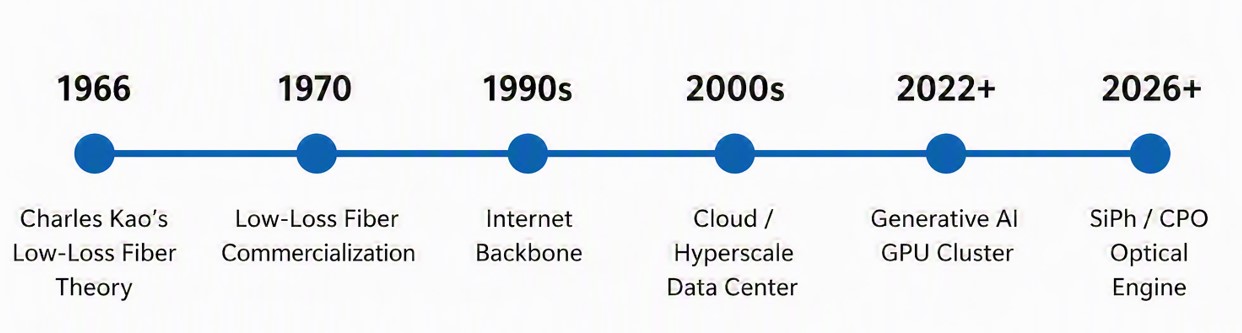
Fig1. Evolution Milestones of Key Technologies in Optical Communication
Optical communication is built upon centuries of scientific exploration into the nature of light. Discoveries ranging from Newton's studies of reflection and dispersion to Young's double-slit experiment, Fresnel's wave theory, Faraday's electromagnetic induction, and Maxwell's electromagnetic theory established the foundation of modern optics. In 1905, Einstein's photon theory confirmed the dual wave-particle nature of light, laying the groundwork for lasers, photodetectors, and optoelectronic technologies.
The invention of the laser in 1960 marked a major breakthrough for optical communications. In 1966, Charles K. Kao proposed low-loss fiber theory, proving optical fiber could serve as a high-bandwidth, long-distance transmission medium. Corning's development of low-loss fiber and industrial’s advances in semiconductor lasers ushered in the modern fiber-optic era. Technologies such as single-mode fiber, SONET, and SDH later enabled the rapid growth of global telecom backbone networks. In the 1990s, the rise of the Internet, combined with EDFA amplifiers and WDM/DWDM technologies, dramatically increased fiber capacity and established today's global backbone and submarine cable networks.
As cloud computing emerged, the industry's focus shifted from telecom to datacom. Growing demand for high-speed interconnects drove Ethernet optics from 10G, 40G, and 100G to 400G and beyond, while form factors such as QSFP, QSFP-DD, and OSFP became industry standards. Standardized reach specifications—including SR, DR, FR, LR, and ZR—further enabled optical communications to become a foundational technology for cloud and AI infrastructure.
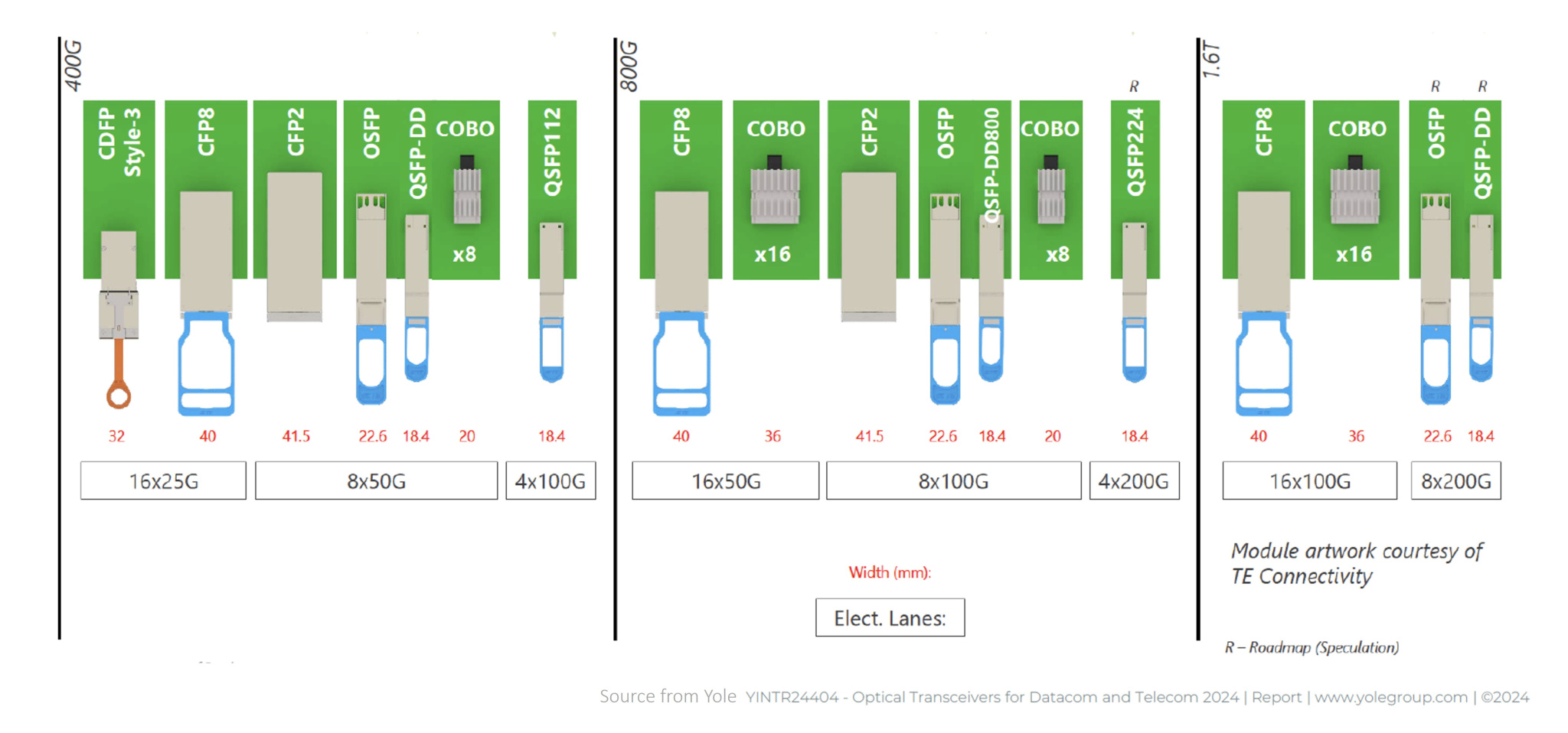
Fig2. Optical Transceiver Technology Trend from 400G-1.6T
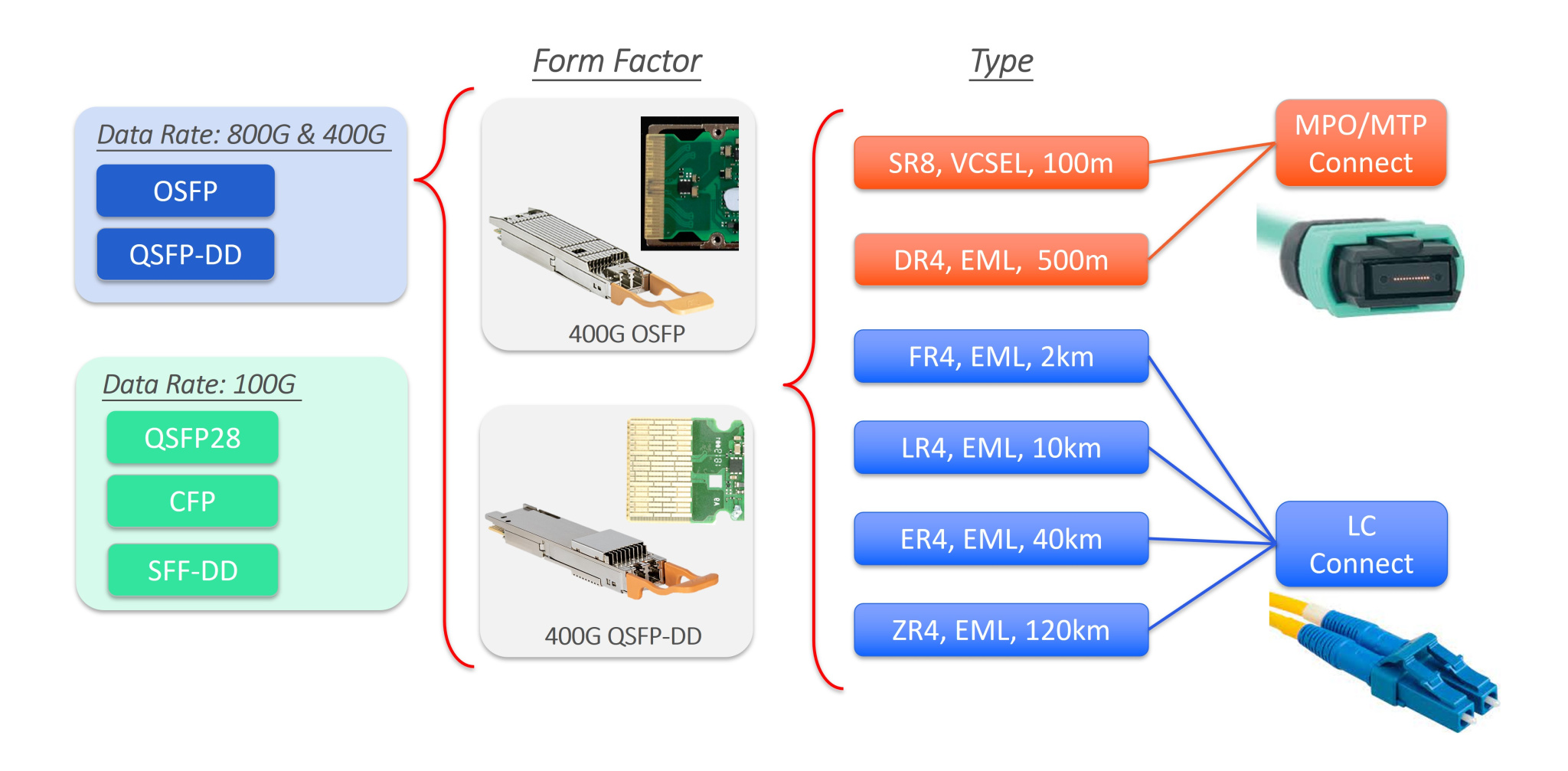
Fig3. Form Factors Evolution of Pluggable Optical Module
AI Drives Explosive Growth in High-Speed Optical Modules
Since the launch of ChatGPT in November 2022, large language models have rapidly grown from hundreds of billions to trillions of parameters. The resulting surge in GPU demand has triggered unprecedented data center expansion worldwide. Today, the key AI bottleneck is not only compute performance but also high-speed data exchange between GPUs.
AI clusters comprising tens or even hundreds of thousands of GPUs require hundreds of Tbps of data throughput. As a result, high-speed optical transceivers have become essential components of AI data centers. This AI-driven shift has transformed optical communications from a telecom-centric market into a datacom growth engine, fueling the industry's largest expansion cycle in decades. Optical modules are rapidly advancing from 100G and 400G to 800G and 1.6T, with 3.2T already on the horizon.
Fig4. Pluggable Optics Evolution Roadmap
To address rising power consumption and signal loss at higher data rates, the industry is evolving from traditional pluggable transceivers toward LPO, NPO, CPO, and eventually Optical I/O architectures.
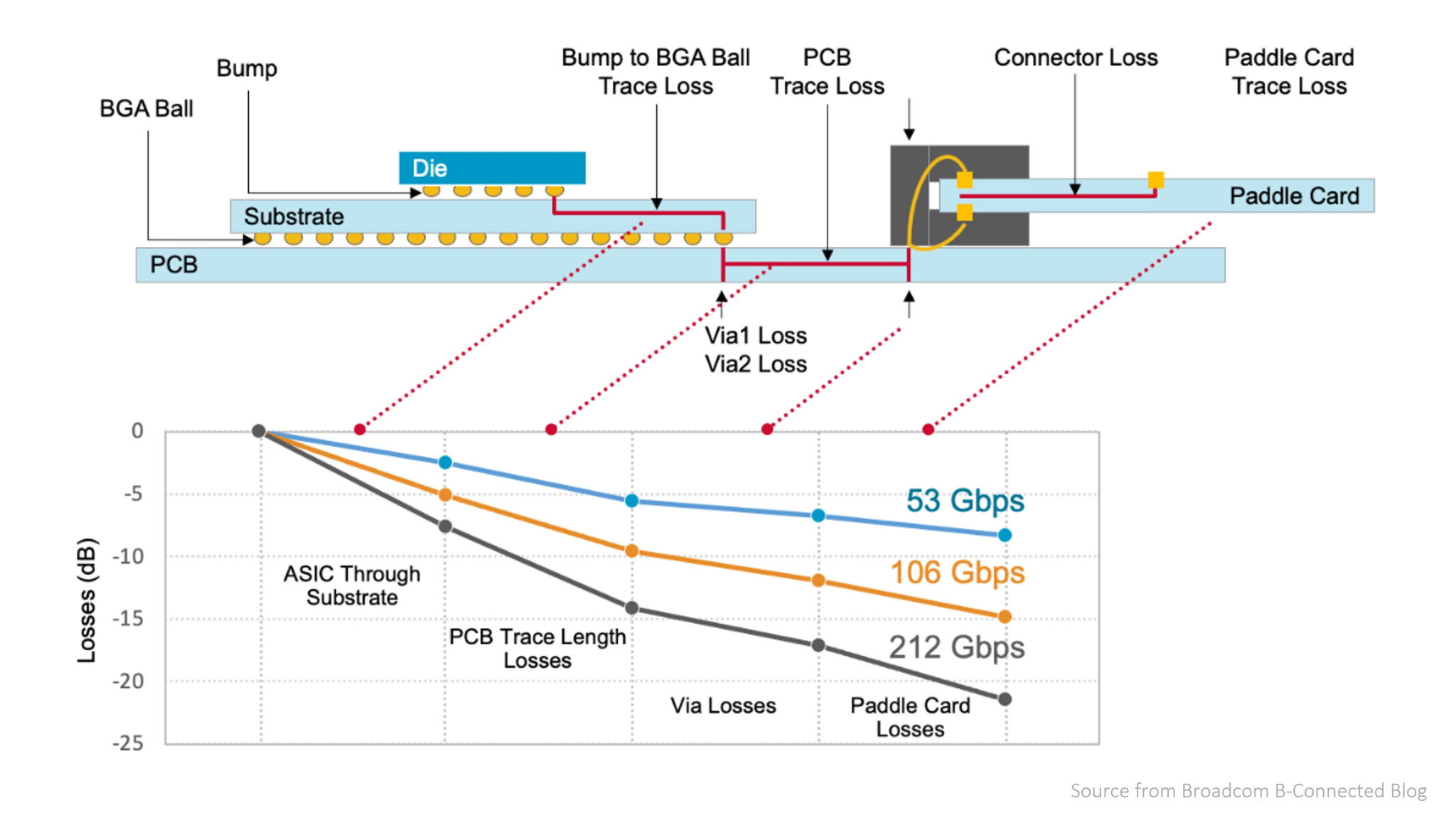
Fig5. Copper I/O Approaching a Limit (Source from Broadcom)
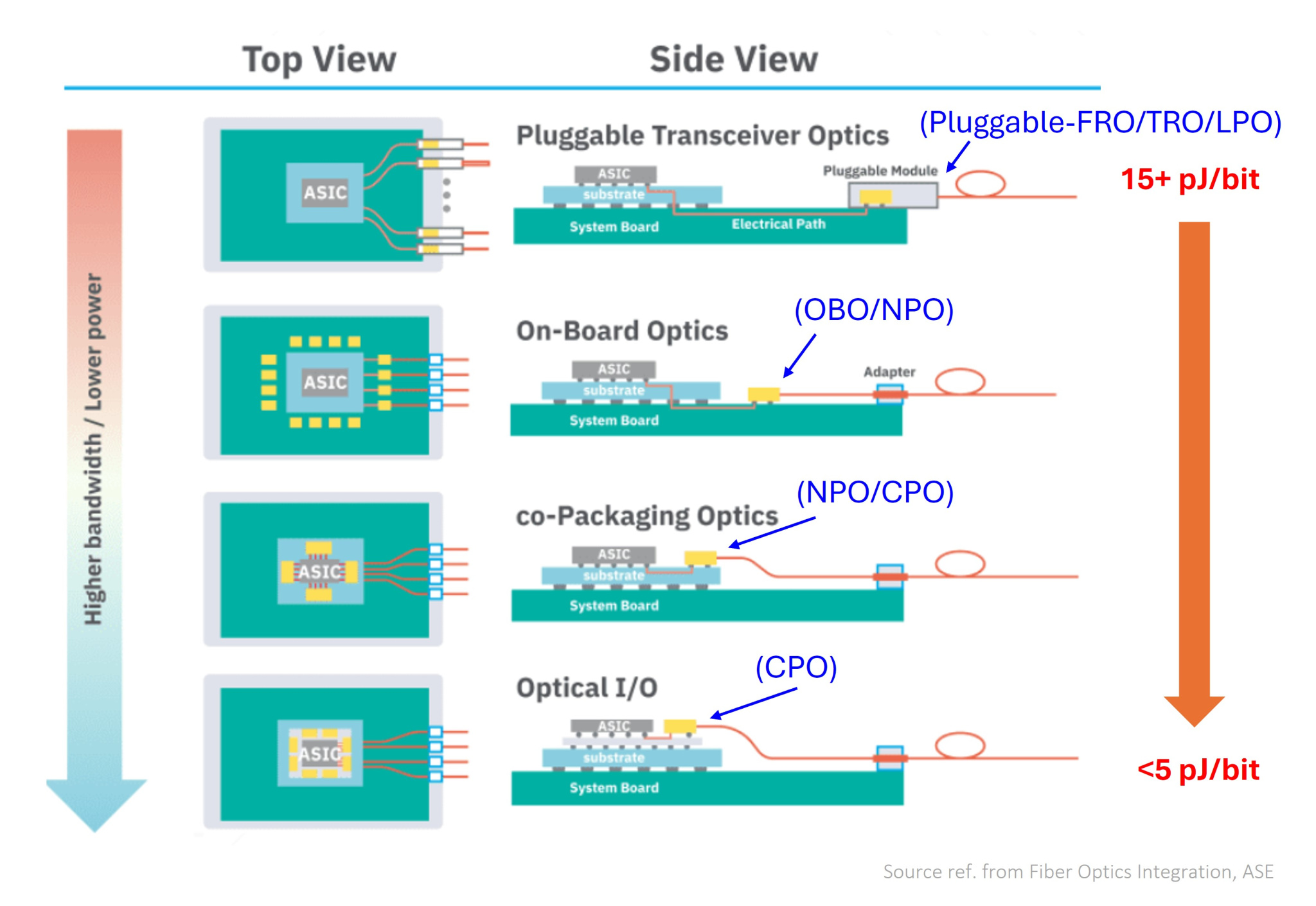
Fig6. Evolution of Fiber Optics Integration (Source ref: ASE)
Traditional optical transceivers are built using discrete optical components such as lasers, lenses, isolators, modulators, and photodetectors, requiring precise optical alignment during assembly. As speeds scale from 100G and 400G to 800G, 1.6T, and beyond, component count, packaging complexity, and power consumption rise significantly, creating cost, size, and manufacturability challenges.
To overcome these limitations, the industry has embraced Silicon Photonics (SiPh). Leveraging mature CMOS processes, SiPh integrates optical functions such as waveguides and modulators onto a single Photonic Integrated Circuit (PIC), increasing integration while reducing assembly costs. More importantly, SiPh enables optical devices to benefit from semiconductor-scale manufacturing. Through heterogeneous integration with electronic ICs, SiPh delivers higher bandwidth density and improved power efficiency. After more than two decades of development, Intel commercialized silicon photonic transceivers in 2016, becoming the first company to deploy SiPh at scale.
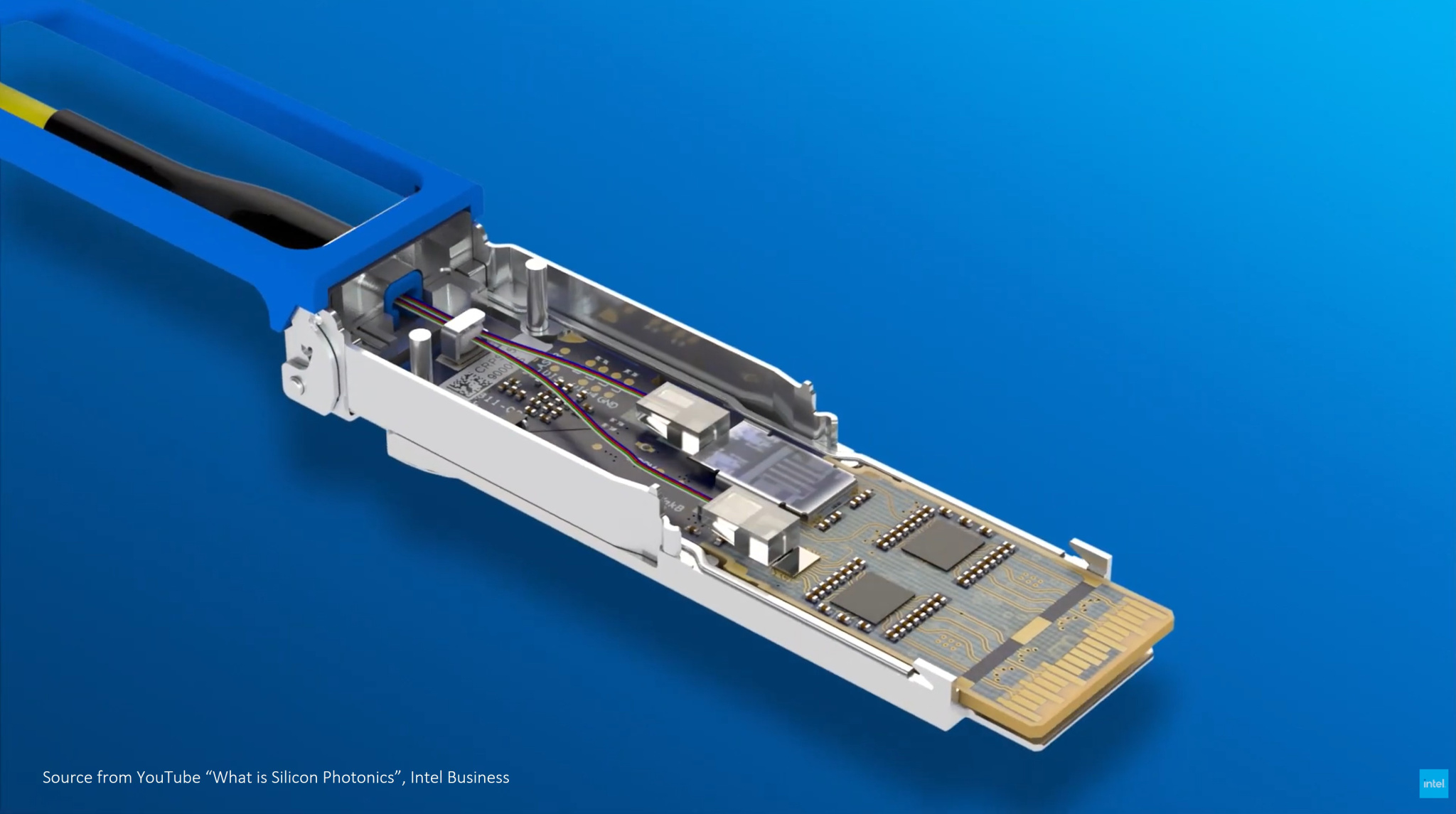
Fig7. Silicon photonics tech integrates optical functions into a single chip (Source from Intel)
CPO further integrates active and passive optical components into an optical engine positioned alongside the switch ASIC, dramatically shortening electrical paths and reducing power and thermal loads. From Discrete Optics to Silicon Photonics and CPO, the industry continues to pursue higher bandwidth density through greater integration. Today, SiPh and CPO represent the most promising technology directions, with both NVIDIA and Broadcom introducing CPO-based switch platforms.
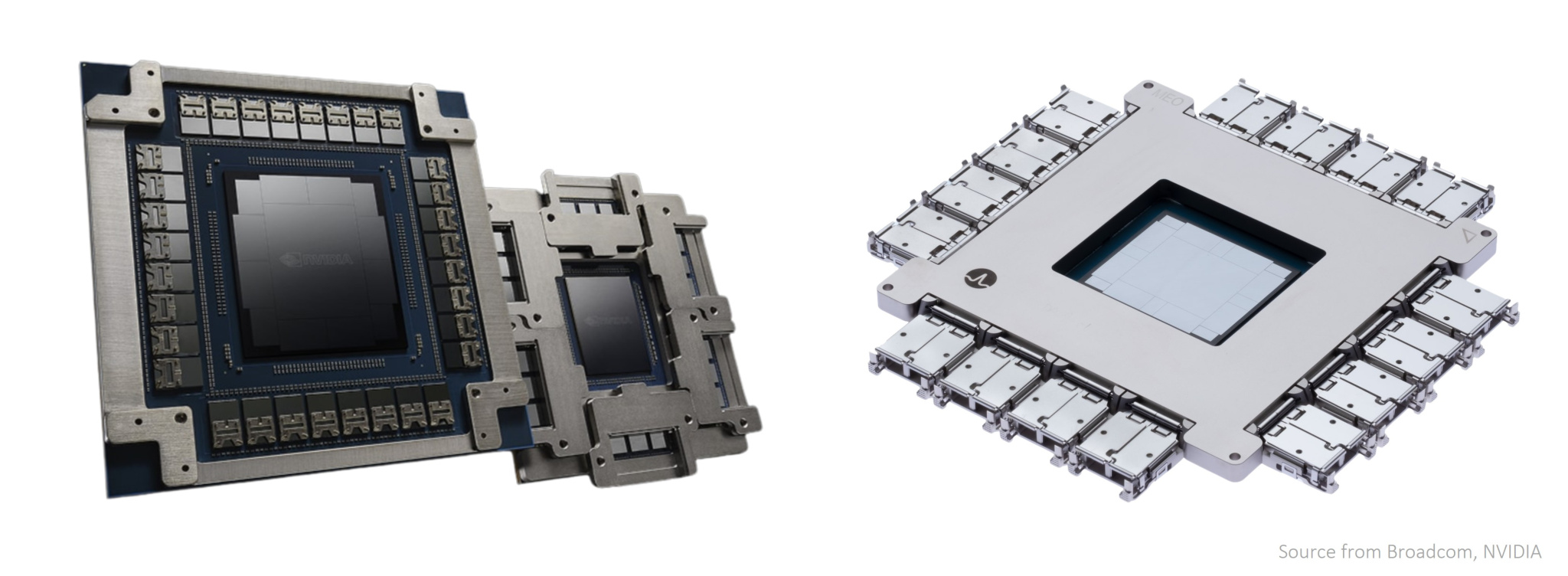
Fig8. Broadcom TH6 CPO & nVidia Quantum/Spectrum CPO
Optical Communications Enter the Era of System Integration
As AI training and inference scale rapidly, demand for high-speed interconnects continues to grow, pushing optical transceivers beyond 400G toward 800G, 1.6T, and eventually 3.2T. However, increasing bandwidth introduces challenges in power efficiency, thermal management, packaging density, and system reliability.
While the optical communications supply chain was once highly specialized, next-generation transceivers now require expertise across optics, signal integrity (SI), power integrity (PI), thermal management, advanced packaging, and validation. As speeds increase, co-design across optical, electrical, and thermal domains has become essential.
At the same time, technologies such as Silicon Photonics and CPO are accelerating industry consolidation. Customers increasingly seek partners capable of delivering end-to-end solutions—from design and simulation to manufacturing and mass production. Companies with strong cross-disciplinary integration capabilities are better positioned to shorten development cycles, reduce deployment risks, and capture opportunities in the AI era.
USI Optical Communication Solutions: From Design to Mass Production
USI offers industry-leading SI/PI design expertise, advanced thermal simulation, Zemax optical design, and high-speed PCB development based on mSAP and substrate technologies. Dedicated optical communication laboratories support performance validation through high-speed eye-diagram measurement and BER testing.
Together with its subsidiary EugenLight, USI provides 400G, 800G, and 1.6T silicon photonic engines and optical transceivers, UHP-grade ELSFP light sources, coherent C/L/C+L band ITLA devices, telecom-grade hermetic 400G LR4/ER4 OSA components, and fast tunable lasers for fiber-sensing applications. USI is also investing in NPO, CPO FAU solutions, optical coupling processes, equipment development, and WDM technologies to support evolving telecom and datacom requirements.
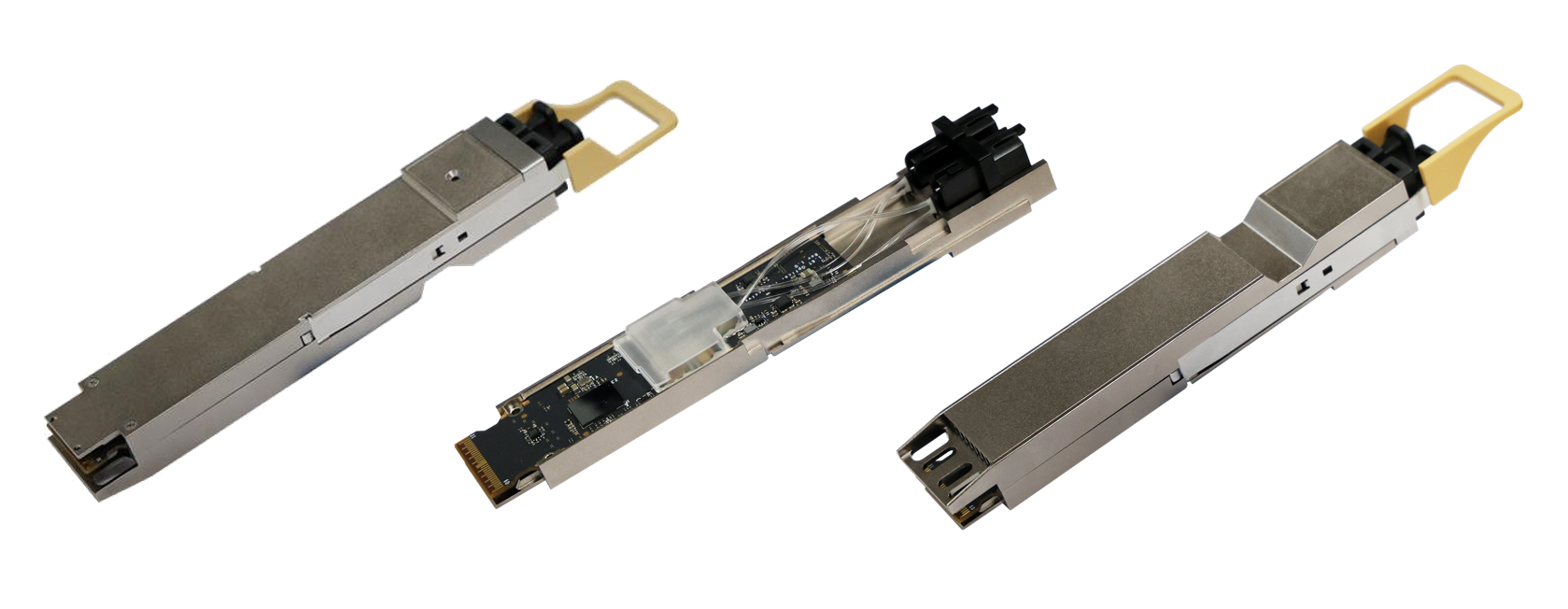
Fig9. IMDD 1.6T DR4x2/DR8/FR4x2 1.6T Optical Transceiver
Beyond R&D, USI provides comprehensive optical module manufacturing services, including high-density SMT, KGD flip-chip, die/wire bonding, optical assembly, and production testing. This enables USI to deliver a complete one-stop solution from design and development to volume production.
---> Learn more about USI Optical Products Catalog and Optical Transceivers Profile
FAQs
Q1: What is optical communication, and why is it critical for AI data centers?
Optical communication transmits data through optical signals over fiber. Its high bandwidth, low loss, and long-reach capability make it essential for connecting GPUs, servers, and switches in AI data centers.
Q2: What is an optical transceiver?
An optical transceiver converts electrical signals into optical signals and vice versa, enabling high-speed fiber transmission. Common form factors include QSFP, QSFP-DD, and OSFP, with SR, DR, FR, LR, and ZR variants for different reach requirements.
Q3: What do 400G, 800G, 1.6T, and 3.2T optical modules mean?
These numbers indicate total module bandwidth. G represents gigabits per second, while T represents terabits per second. As AI networking demands grow, the market is transitioning from 400G and 800G to 1.6T and eventually 3.2T.
Q4: What is Silicon Photonics?
Silicon Photonics integrates optical functions, such as waveguides and modulators, onto a photonic integrated circuit (PIC). Compared with discrete optics, it offers higher integration, lower cost, improved power efficiency, and better scalability.
Q5: What is Co-Packaged Optics (CPO)?
CPO places optical engines adjacent to switch ASICs, shortening electrical signal paths and reducing signal loss, power consumption, and thermal challenges.
Q6: Why do high-speed optical modules require optical-electrical-thermal co-design?
As speeds increase, challenges related to signal integrity, power noise, heat accumulation, optical alignment, and packaging tolerances become more critical. Successful products require coordinated optical, electrical, and thermal design.
Q7: What optical communication products and manufacturing services does USI provide?
USI delivers SI/PI design, thermal simulation, Zemax optical modeling, high-speed PCB design, eye-diagram measurement, and BER testing capabilities. Together with EugenLight, USI provides 400G, 800G, and 1.6T silicon photonic engines and optical transceivers, supported by complete SMT, packaging, optical assembly, testing, and mass-production services.
Search
Recent Articles
-
From Untestable to Precisely Tested: Cracking the High-Density ICT Challenge
 From Untestable to Precisely Tested: Cracking the High-Density ICT Challenge
10/16/2026
From Untestable to Precisely Tested: Cracking the High-Density ICT Challenge
10/16/2026
-
Inside 1.6T Optical Transceivers: How Optical Simulation and Coupling Shape Performance and Yield
 Inside 1.6T Optical Transceivers: How Optical Simulation and Coupling Shape Performance and Yield
09/21/2026
Inside 1.6T Optical Transceivers: How Optical Simulation and Coupling Shape Performance and Yield
09/21/2026
-
The Next Frontier in AI Computing: Design and Manufacturing of 1.6T Optical Transceiver Modules
 The Next Frontier in AI Computing: Design and Manufacturing of 1.6T Optical Transceiver Modules
09/07/2026
The Next Frontier in AI Computing: Design and Manufacturing of 1.6T Optical Transceiver Modules
09/07/2026
-
A Key Step in Further Wearable Miniaturization: Selective Encapsulation with Fence + VPE
 A Key Step in Further Wearable Miniaturization: Selective Encapsulation with Fence + VPE
08/17/2026
A Key Step in Further Wearable Miniaturization: Selective Encapsulation with Fence + VPE
08/17/2026
-
Enabling AI at Scale: The Rise of Silicon Photonics and Optical Transceiver
 Enabling AI at Scale: The Rise of Silicon Photonics and Optical Transceiver
08/03/2026
Enabling AI at Scale: The Rise of Silicon Photonics and Optical Transceiver
08/03/2026
-
When AI Learns to “Read”: Using Deep Learning to Tame the False-Alarm Storm on SMT Production Lines
 When AI Learns to “Read”: Using Deep Learning to Tame the False-Alarm Storm on SMT Production Lines
07/13/2026
When AI Learns to “Read”: Using Deep Learning to Tame the False-Alarm Storm on SMT Production Lines
07/13/2026
-
Catching Invisible “Micro-Failures”: Safeguarding SiP Reliability Testing with Daisy Chains
 Catching Invisible “Micro-Failures”: Safeguarding SiP Reliability Testing with Daisy Chains
06/29/2026
Catching Invisible “Micro-Failures”: Safeguarding SiP Reliability Testing with Daisy Chains
06/29/2026
-
The Hidden Rival Inside an EV’s Heart: Cracking the Power-Loss Puzzle with “Physical Modeling”
 The Hidden Rival Inside an EV’s Heart: Cracking the Power-Loss Puzzle with “Physical Modeling”
06/17/2026
The Hidden Rival Inside an EV’s Heart: Cracking the Power-Loss Puzzle with “Physical Modeling”
06/17/2026
-
Behind the MFG. | From "Manufacturing" to "Creation" Ep.2: Innovation Built from Zero to One
 Behind the MFG. | From "Manufacturing" to "Creation" Ep.2: Innovation Built from Zero to One
05/28/2026
Behind the MFG. | From "Manufacturing" to "Creation" Ep.2: Innovation Built from Zero to One
05/28/2026
-
Behind the MFG. | From "Manufacturing" to "Creation" Ep.1: Unveiling USI’s Technological Vanguard
 Behind the MFG. | From "Manufacturing" to "Creation" Ep.1: Unveiling USI’s Technological Vanguard
05/07/2026
Behind the MFG. | From "Manufacturing" to "Creation" Ep.1: Unveiling USI’s Technological Vanguard
05/07/2026
Keep up with top trending topic
For the latest innovation technology, application
and industry insight.
Subscribe Our Blog
For the latest innovation technology, application
and industry insight.