
USI Blog
Top trending topic for the latest innovation technology, application and industry insight.
Search
- 08/17/2026
A Key Step in Further Wearable Miniaturization: Selective Encapsulation with Fence + VPE

Author: Vincent Liao, Director of MCC, AMS Group
The race to make electronics lighter, thinner, shorter, and smaller never stops. Watches must fit the wrist better, earbuds must fit smaller cavities, and smart glasses must remain nearly unnoticeable all day. These demands lead to one engineering challenge: how can critical components be protected in less space without wasting any area?
USI has long focused on system-in-package (SiP) technology, tightening component spacing, using molding to improve reliability, and achieving benchmark production yields. Our latest challenge is selective encapsulation. By combining a fence structure with vacuum printing encapsulation (VPE), we reduced the conventional 1.2 mm design clearance to 0.15 mm while balancing miniaturization, yield, and production efficiency.
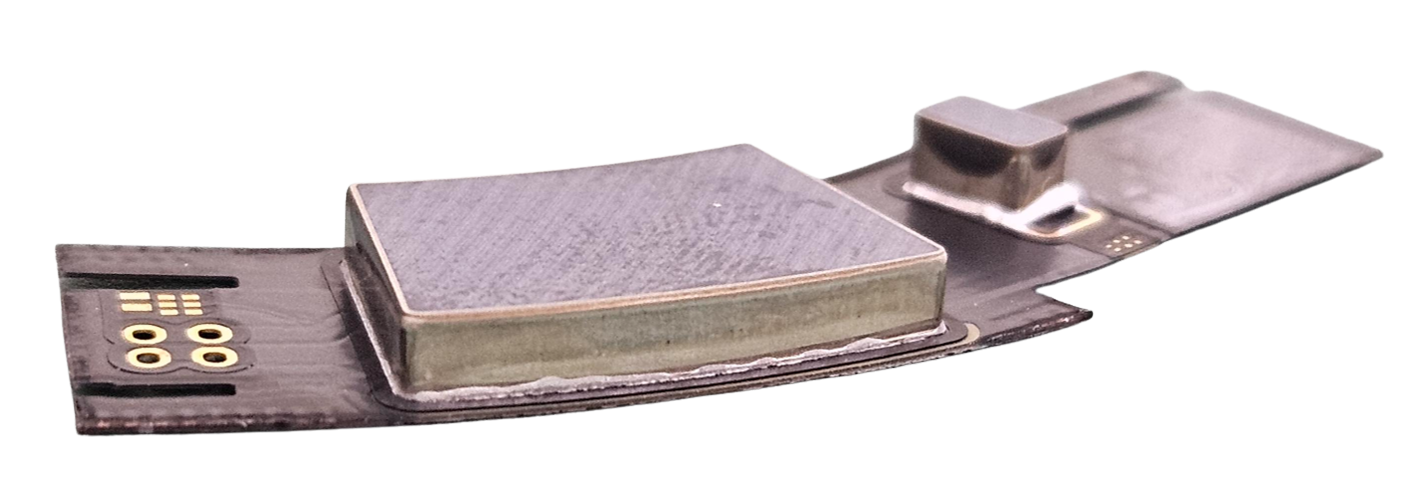
Figure 1 | USI selective-encapsulation sample on a flexible PCB. The module is precisely encapsulated while surrounding areas remain available for bending and contacts, ideal for wearables.
Why Is Partial Encapsulation So Difficult?
Many wearables do not require encapsulation across the entire board. Some areas must protect sensitive bare dies and wire bonds, while others must preserve antennas, connectors, or bendable flex structures. Selective encapsulation protects only the required areas. The challenge is the clearance between components inside and outside the encapsulated area. Smaller clearance enables higher component density and a smaller product. Two conventional approaches have significant limitations:
- Dam & Fill: A low-flow material is dispensed and cured to form a dam, then a high-flow material fills the enclosed area. Although mature and accessible, the process treats each package individually. A panel with 300 packages requires 300 dispensing cycles, limiting units per hour (UPH). With a typical 0.5:1 height-to-width ratio, a 1.0 mm encapsulation height needs about 2.0 mm of width, making further miniaturization difficult.
- Selective Transfer Molding: Custom tooling enables efficient batch processing. However, runners can cover non-encapsulated areas, while draft angles increase spacing between components inside and outside the molded area. Custom tooling also carries an NRE cost of about US$260,000 to US$300,000, which many projects cannot justify.
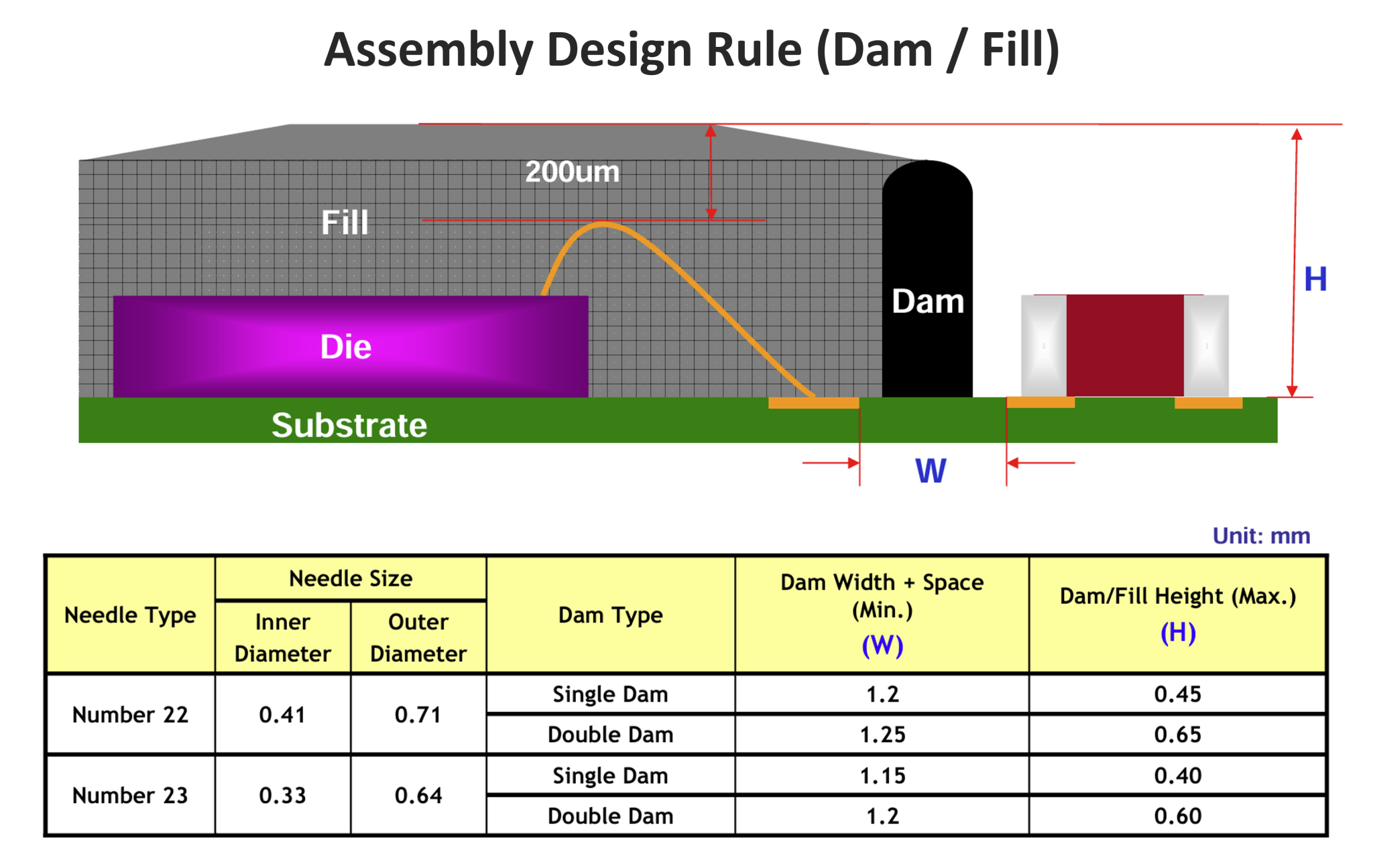
Figure 2 | Conventional Dam & Fill design rules. Dispensing-needle size constrains dam width (W) and height (H); taller components require more width, limiting miniaturization.
USI Solution: Replace the Dam with a Fence and the Fill with VPE
The R&D team took a direct approach: replace both problematic steps. A prefabricated fence replaces the dam, while vacuum printing encapsulation (VPE) replaces the fill. Together, they address four persistent issues: clearance, cost, runners, and production efficiency.
What is a fence? It is a prefabricated metal or non-metal component placed precisely on the substrate by pick-and-place equipment to define the encapsulation area. Its thickness depends only on its own structural strength, not on the height of the encapsulated components. Whether components are 0.5 mm or 3.0 mm tall, the fence can remain just 0.15 mm thick, eliminating the conventional tradeoff in which taller components require thicker dams.
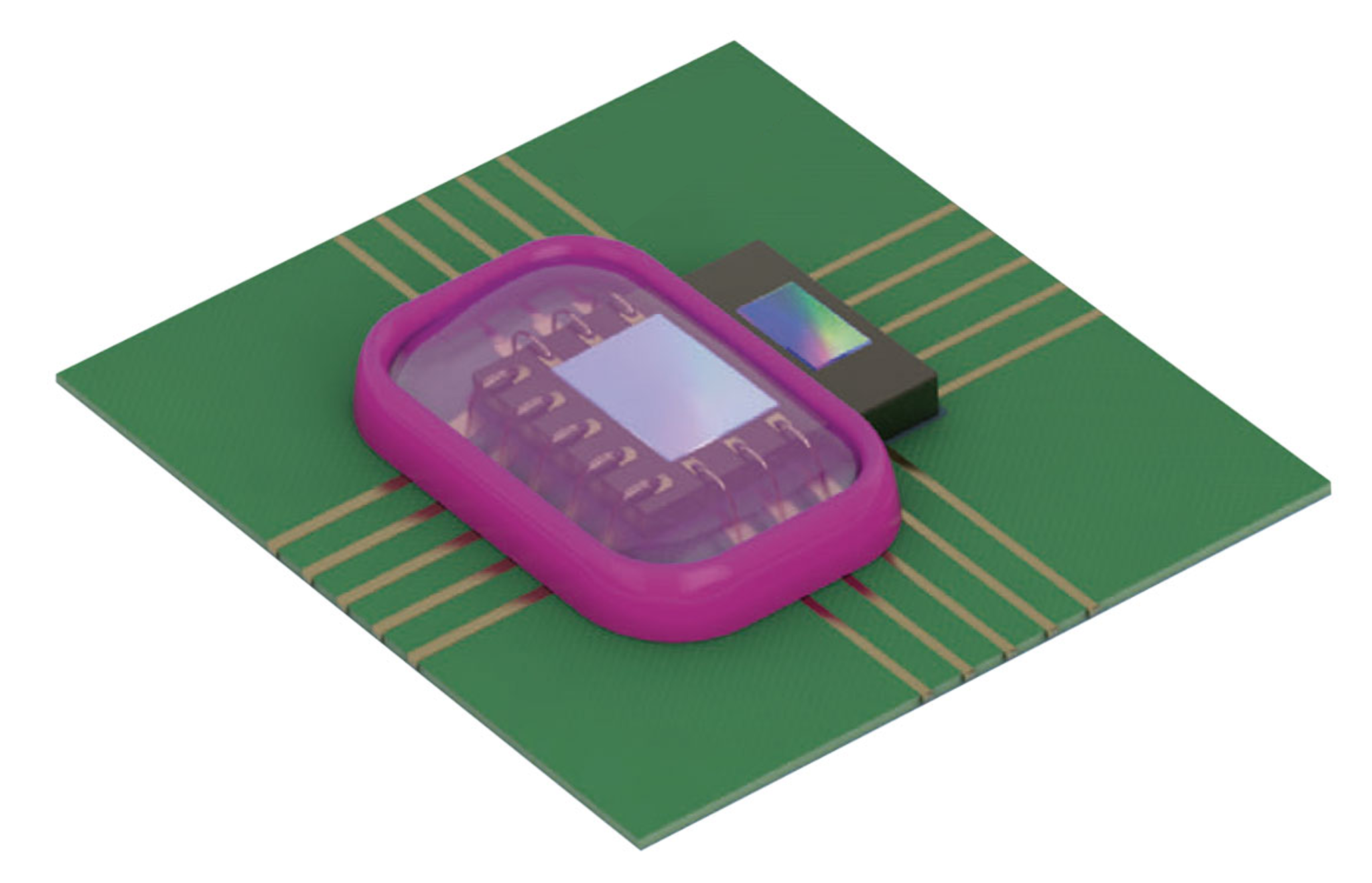
Figure 3 | Fence concept. A prefabricated ring defines the area on the substrate, and VPE completes encapsulation, replacing package-by-package dam dispensing.
What does VPE add? It prints a liquid encapsulant at room temperature and cures it under vacuum and pressure. With no mold-flow stress, the process is gentler on sensitive components and wire bonds, while vacuum-assisted curing further reduces voids. A stencil defines the area, enabling full-panel processing over a work area of up to 400 × 400 mm for high batch efficiency.
Conventional vs. New: Three Decisive Differences
Compared with the two conventional approaches, USI Fence + VPE delivers more than an incremental gain. It changes the design rules.
| Category | Conventional: Dam & Fill / Selective Transfer Molding | USI Solution: Fence + VPE |
|---|---|---|
| (Clearance) Design Clearance |
Dam width is about twice component height: a 1.5 mm component needs about 3.0 mm. Mold clamping and draft angles in selective transfer molding require about 2.1 mm for a 1.0 mm component. | Fence thickness depends on its own strength, not component height. For components 0.5 to 3.0 mm tall, fence thickness remains 0.15 mm. |
| Production Efficiency (UPH) | Dam & Fill requires one dispensing cycle per package, limiting UPH. Selective transfer molding supports batch processing, but its maximum work area is about 95 × 240 mm. | Full-panel processing with a work area up to 400 × 400 mm supports high-UPH mass production. |
| Tooling and Runner Cost |
Selective transfer molding requires custom tooling with NRE of about US$260,000 to US$300,000. Runners can interfere with components and traces outside the encapsulated area. | A stencil defines the encapsulation area, eliminating costly custom tooling and runners, avoiding interference outside the area, and expanding material options. |
Two Designs with Integrated Compartmental EMI Shielding
After repeated refinement and testing, the technology evolved into two versions. Type 1 uses a metal fence with a conformal EMI shielding film to provide compartmental shielding for interference-sensitive applications such as smartphone mainboards. For a 1.5 mm component, total clearance is only about 0.55 mm. Type 2 uses a non-metal fence, such as liquid crystal polymer (LCP), for system boards containing bare dies. Both versions eliminate costly custom tooling and allow customers to select the encapsulant best suited to each product.
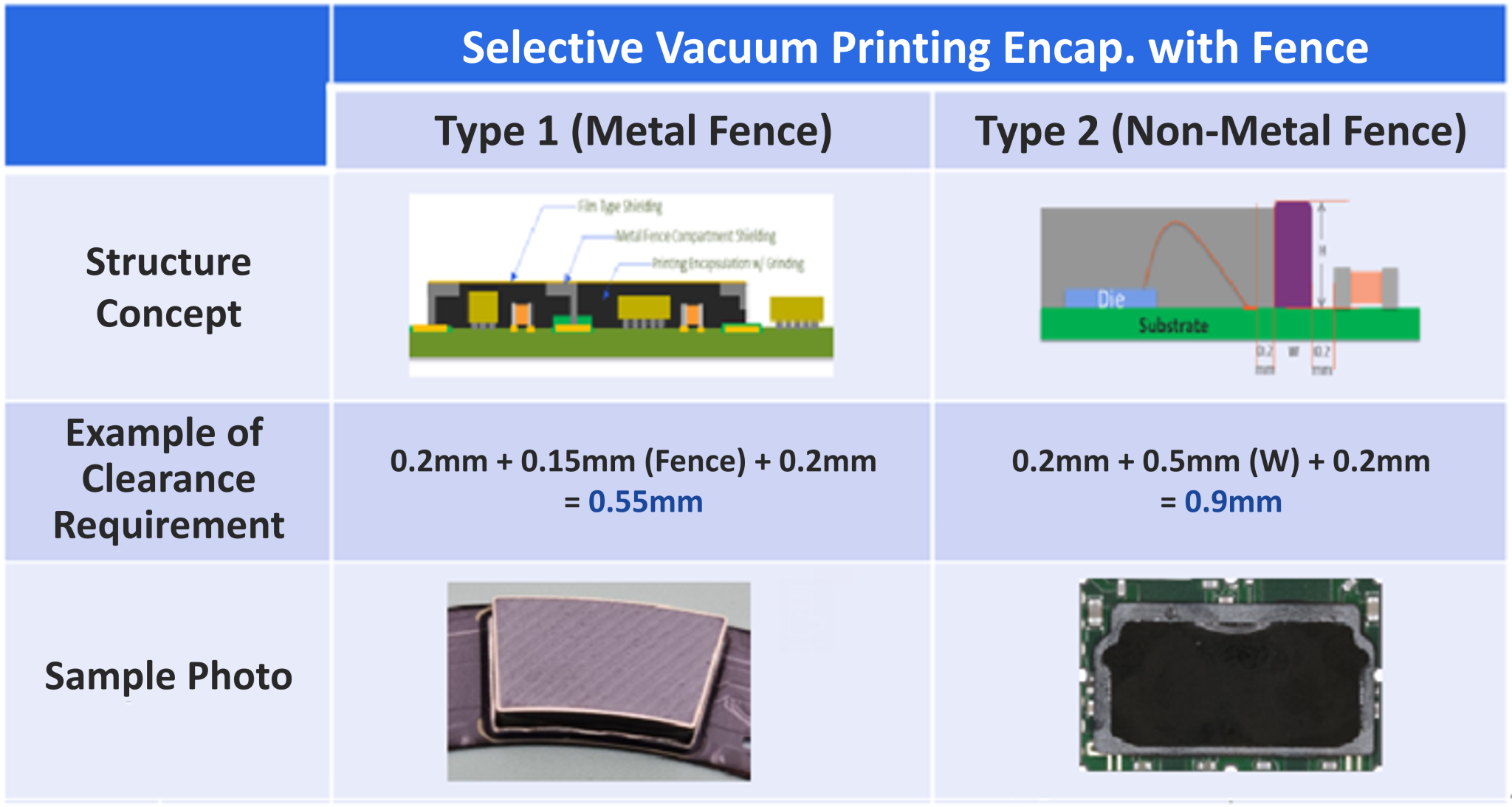
Figure 4 | Type 1 metal and Type 2 non-metal fence structures, clearance requirements, and samples. The metal version can integrate compartmental EMI shielding.
Space Saved Becomes Product Advantage
Beyond technical metrics, the real value is greater design freedom for USI customers. Compact designs once constrained by clearance and tooling cost now have a viable path to mass production.
- Smaller footprint: Superior design rules enable more comfortable and attractive wearables.
- Lower cost: No custom tooling or runners, higher throughput, a larger work area, shorter implementation time, and lower NRE barriers.
- Greater flexibility: Metal and non-metal versions, multiple encapsulant options, and optional compartmental EMI shielding support applications from RF modules to bare-die system boards.
*Patent pending for Selective Encapsulation Using VPE with Fence. Data shown are engineering reference values; actual specifications depend on project design.
Frequently Asked Questions
Q: What is selective encapsulation, and why do wearables need it?
A: It protects only selected areas, preserving space for antennas, connectors, and flexible circuits while safeguarding bare dies and wire bonds.
Q: How does VPE differ from conventional transfer molding?
A: VPE uses room-temperature vacuum printing without mold-flow stress, reducing voids and protecting sensitive components. Its 400 × 400 mm work area also improves throughput.
Q: Why can a fence reduce design clearance to 0.15 mm?
A: Its thickness depends on structural strength, not component height, allowing a consistent 0.15 mm profile for components 0.5 to 3.0 mm tall.
Q: What are the main advantages of USI Fence + VPE over Dam & Fill?
A: It enables full-panel processing for higher throughput and supports more encapsulants, including high-Tg options.
Q: How much cost can Fence + VPE save versus selective transfer molding?
A: It eliminates custom tooling costing US$260,000 to US$300,000 and requires no runners. It also expands the work area from 95 × 240 mm to 400 × 400 mm.
Q: How should customers choose between metal and non-metal fences?
A: Type 1 metal Fences support compartmental EMI shielding. Type 2 non-metal Fences suit bare-die systems. Selection depends on shielding, component height, and cost.
Q: What role does USI play in the supply chain for this technology?
A: USI turns advanced packaging concepts into production-ready solutions, from material validation and design rules to mass production.
Search
Recent Articles
-
From Untestable to Precisely Tested: Cracking the High-Density ICT Challenge
 From Untestable to Precisely Tested: Cracking the High-Density ICT Challenge
10/16/2026
From Untestable to Precisely Tested: Cracking the High-Density ICT Challenge
10/16/2026
-
Inside 1.6T Optical Transceivers: How Optical Simulation and Coupling Shape Performance and Yield
 Inside 1.6T Optical Transceivers: How Optical Simulation and Coupling Shape Performance and Yield
09/21/2026
Inside 1.6T Optical Transceivers: How Optical Simulation and Coupling Shape Performance and Yield
09/21/2026
-
The Next Frontier in AI Computing: Design and Manufacturing of 1.6T Optical Transceiver Modules
 The Next Frontier in AI Computing: Design and Manufacturing of 1.6T Optical Transceiver Modules
09/07/2026
The Next Frontier in AI Computing: Design and Manufacturing of 1.6T Optical Transceiver Modules
09/07/2026
-
A Key Step in Further Wearable Miniaturization: Selective Encapsulation with Fence + VPE
 A Key Step in Further Wearable Miniaturization: Selective Encapsulation with Fence + VPE
08/17/2026
A Key Step in Further Wearable Miniaturization: Selective Encapsulation with Fence + VPE
08/17/2026
-
Enabling AI at Scale: The Rise of Silicon Photonics and Optical Transceiver
 Enabling AI at Scale: The Rise of Silicon Photonics and Optical Transceiver
08/03/2026
Enabling AI at Scale: The Rise of Silicon Photonics and Optical Transceiver
08/03/2026
-
When AI Learns to “Read”: Using Deep Learning to Tame the False-Alarm Storm on SMT Production Lines
 When AI Learns to “Read”: Using Deep Learning to Tame the False-Alarm Storm on SMT Production Lines
07/13/2026
When AI Learns to “Read”: Using Deep Learning to Tame the False-Alarm Storm on SMT Production Lines
07/13/2026
-
Catching Invisible “Micro-Failures”: Safeguarding SiP Reliability Testing with Daisy Chains
 Catching Invisible “Micro-Failures”: Safeguarding SiP Reliability Testing with Daisy Chains
06/29/2026
Catching Invisible “Micro-Failures”: Safeguarding SiP Reliability Testing with Daisy Chains
06/29/2026
-
The Hidden Rival Inside an EV’s Heart: Cracking the Power-Loss Puzzle with “Physical Modeling”
 The Hidden Rival Inside an EV’s Heart: Cracking the Power-Loss Puzzle with “Physical Modeling”
06/17/2026
The Hidden Rival Inside an EV’s Heart: Cracking the Power-Loss Puzzle with “Physical Modeling”
06/17/2026
-
Behind the MFG. | From "Manufacturing" to "Creation" Ep.2: Innovation Built from Zero to One
 Behind the MFG. | From "Manufacturing" to "Creation" Ep.2: Innovation Built from Zero to One
05/28/2026
Behind the MFG. | From "Manufacturing" to "Creation" Ep.2: Innovation Built from Zero to One
05/28/2026
-
Behind the MFG. | From "Manufacturing" to "Creation" Ep.1: Unveiling USI’s Technological Vanguard
 Behind the MFG. | From "Manufacturing" to "Creation" Ep.1: Unveiling USI’s Technological Vanguard
05/07/2026
Behind the MFG. | From "Manufacturing" to "Creation" Ep.1: Unveiling USI’s Technological Vanguard
05/07/2026
Keep up with top trending topic
For the latest innovation technology, application
and industry insight.
Subscribe Our Blog
For the latest innovation technology, application
and industry insight.