
USI Blog
Top trending topic for the latest innovation technology, application and industry insight.
Search
- 11/23/2026
Wi-Fi 8 vs. Wi-Fi 7: What the “Three 25%” Targets Mean for Connectivity in AI Wearables

It’s 6 p.m. at a busy metro station. Hundreds of phones, earbuds, and smartwatches are competing for a connection, while a dozen nearby wireless access points (APs) interfere with one another on the same spectrum. You’re using smart glasses to translate a conversation in real time when the display suddenly freezes for two seconds. The problem usually isn’t that the network is too slow—it’s that the connection isn’t stable enough.
This is exactly the problem Wi-Fi 8 (IEEE 802.11bn) is designed to solve. The IEEE task group developing the standard is named Ultra-High Reliability (UHR), and its priority is no longer peak speed but consistent performance in the most congested environments. USI has launched its Wi-Fi 8 technology roadmap and, building on its volume-production experience with Wi-Fi 6E and Wi-Fi 7 System-in-Package (SiP) modules, plans to introduce Wi-Fi 8 products in Q1 2027.
From Wi-Fi 6 to Wi-Fi 8: The Race Shifts from Speed to Stability
Looking back, Wi-Fi 6 used OFDMA to improve efficiency in crowded environments; Wi-Fi 6E opened the 6 GHz band, effectively adding a new highway; and Wi-Fi 7 widened the lanes to 320 MHz and used Multi-Link Operation (MLO) to push peak data rates to new highs (Figure 1).
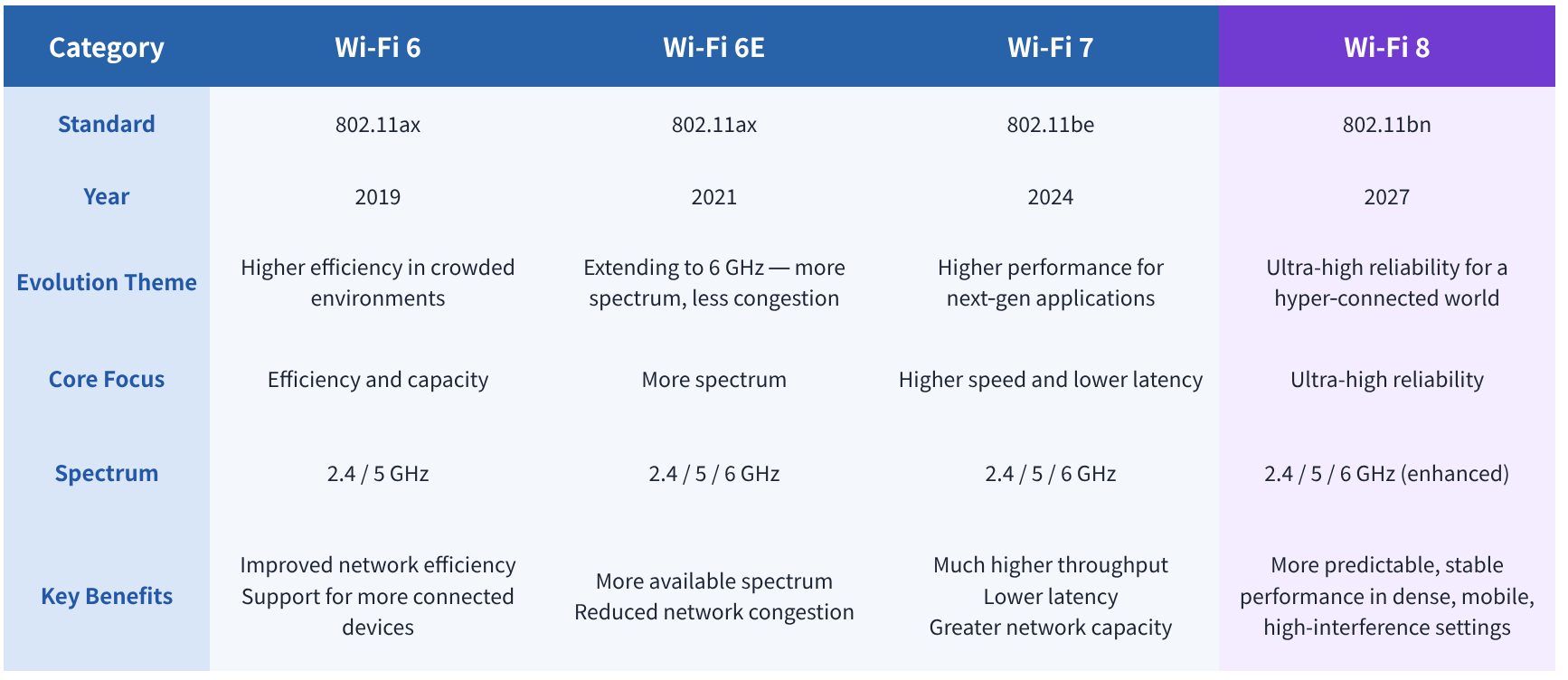
Figure 1: Evolution of Wi-Fi generations from Wi-Fi 6 to Wi-Fi 8. (Source: Compiled by USI)
For users, however, peak speed stopped being the pain point long ago—sudden stalls are. Wi-Fi 8’s goals are therefore highly pragmatic. Compared with Wi-Fi 7, it targets at least 25% higher throughput under poor signal conditions, 25% lower 95th-percentile latency, and 25% fewer lost packets when roaming between APs (Figure 2). Rather than looking at the average, 95th-percentile latency focuses on the worst 5% of cases—exactly where frustrating lag hides.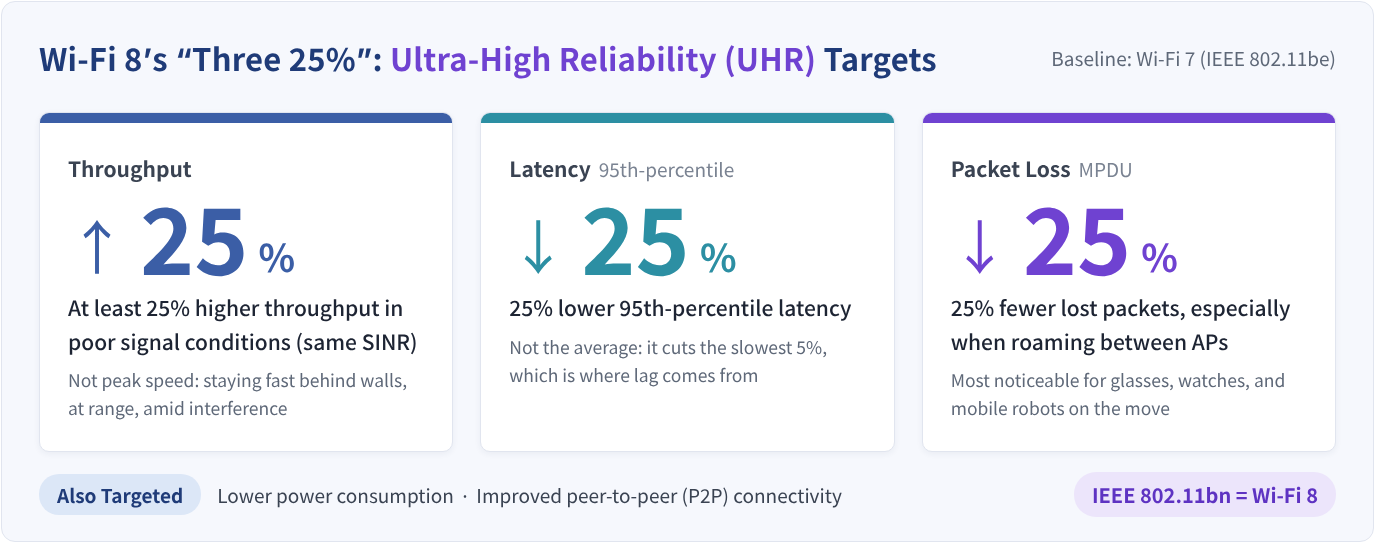
Figure 2: Wi-Fi 8’s “Three 25%” Ultra-High Reliability design targets.
(Source: IEEE 802.11bn project objectives as summarized by Samsung Research; graphic by USI)
Three Categories of Key Technologies: Teaching APs to Work Together
The key to Wi-Fi 8’s stability is smarter coordination across the network. The main technologies fall into three categories (Figure 3):
- Multi-AP Coordination: Today, neighboring APs behave like teachers in adjacent classrooms all raising their voices—in the end, no one can hear clearly. Coordinated Beamforming (Co-BF) steers signals toward each AP’s own devices while avoiding its neighbors’; Coordinated Spatial Reuse (Co-SR) coordinates transmit power so that neighboring APs can transmit simultaneously.
- Dynamic Spectrum Optimization: Dynamic Subband Operation (DSO) lets a wideband AP assign devices that support only narrower bandwidths to idle subchannels, so empty lanes on the highway no longer go to waste.
- PHY Enhancements: Distributed Resource Units (DRU) spread a small device’s signal across a wider frequency range, raising uplink transmit power within regulatory limits; Enhanced Long Range (ELR) keeps distant, weak-signal devices connected; and Unequal Modulation (UEQM) lets each spatial stream use a modulation scheme matched to its own signal quality.
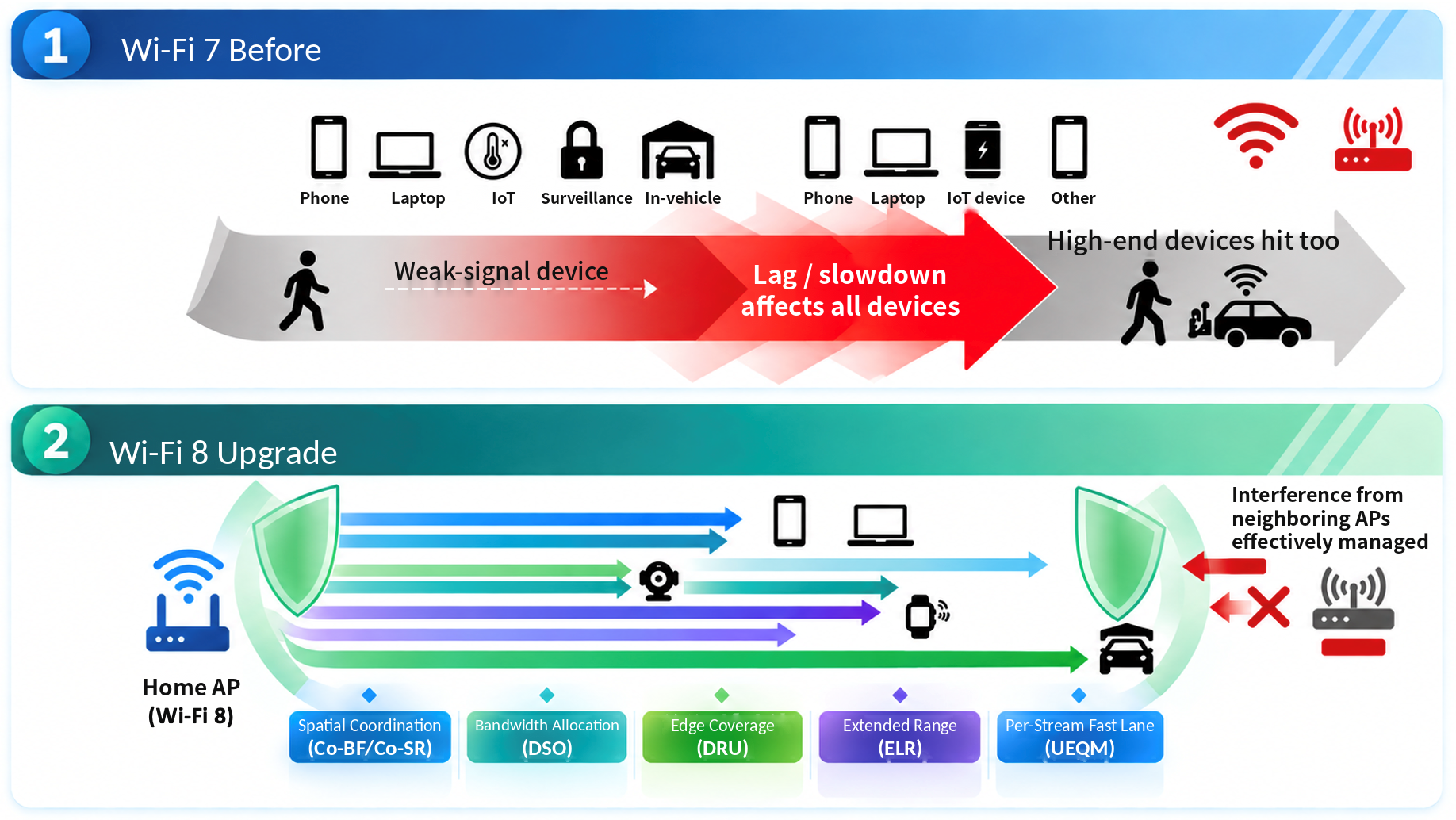
Figure 3: How key Wi-Fi 8 technologies improve connection quality in multi-device, multi-AP environments. (Source: USI)
From AI PCs to Wearables and Robots: Where Wi-Fi 8 Matters Most
Wi-Fi 8 delivers the most value in small and mobile devices (Figure 4). AI applications and cloud collaboration on AI PCs and smartphones demand real-time data exchange. Smart glasses, smart rings, and TWS earbuds have severely constrained antennas and batteries and inherently weaker signals—precisely the problems DRU, ELR, and Dynamic Power Save (DPS) are designed to address. Mobile robots constantly roam between APs, so a 25% reduction in packet loss directly determines whether control commands arrive on time.
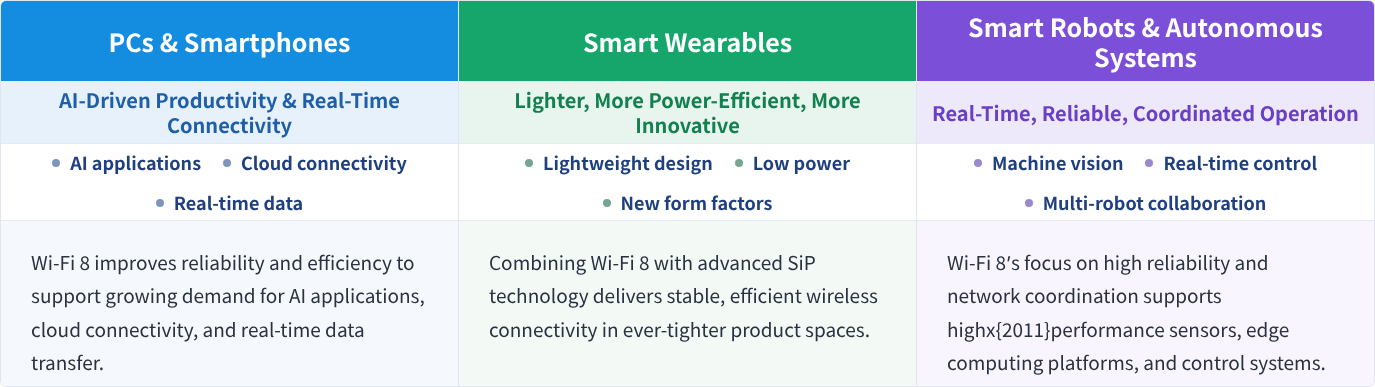
Figure 4: Three major Wi-Fi 8 application areas and their requirements. (Source: USI)
Market momentum is already building. According to Counterpoint Research, global smart glasses shipments grew 212% year over year in the first half of 2026, and chipmakers including Broadcom, MediaTek, and Qualcomm have been unveiling Wi-Fi 8 chips since Q4 2025. With the chips in place, the real challenge is how to fit them into a ring.
Beyond the Chip: Fitting a Complete Wireless System into a Tiny Footprint
Full Wi-Fi functionality requires more than a single chip. It also includes the RF front-end, antennas, power management, and dozens of passive components. In a smartphone, these can be spread across the main board; in a ring or earbuds, space is measured in square millimeters, and interference, thermal performance, and power consumption must all be managed.
This is where System-in-Package (SiP) excels. By integrating multiple chips and passive components into a single package, SiP effectively compresses an entire circuit board into a chip-sized module. Based on the USI development team’s track record (Figure 5), double-sided molding reduces area by about 30%, wafer-level/system modules by 40–60%, and Antenna-in-Package (AiP) by about 30%, while irregular-shaped packages can be tailored to a product’s form factor. Combined with Selective Conformal Shielding and Compartment Shielding, RF signals can coexist without interference in extremely tight spaces.
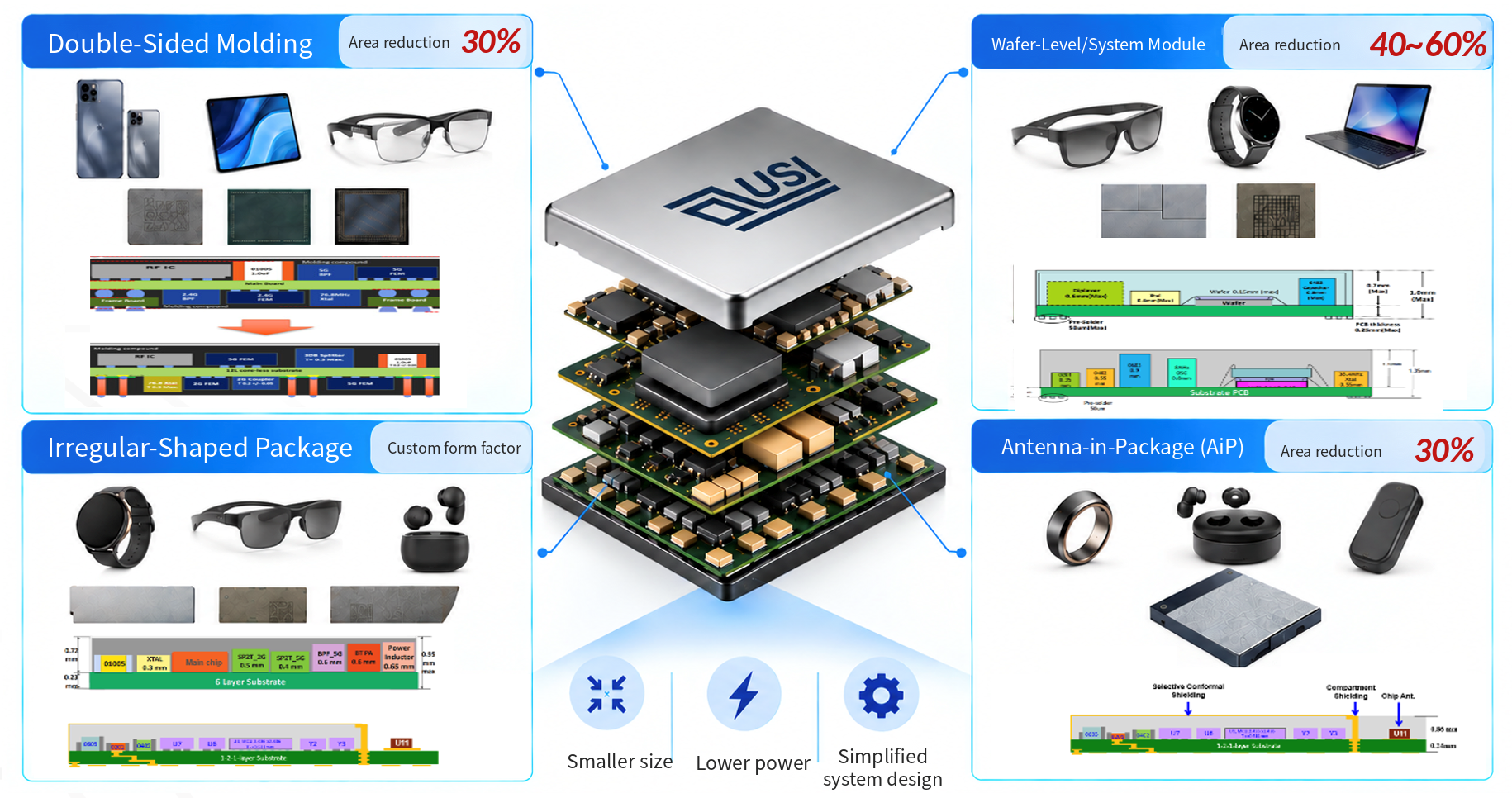
Figure 5: USI SiP miniaturization technologies and area-reduction benefits. (Source: USI)
For Wi-Fi 8, wireless ICs, RF front-ends, antennas, power management, and advanced packaging must be co-designed from the earliest stage. The miniaturization and RF shielding expertise USI has built through Wi-Fi 6E and Wi-Fi 7 SiP is the technical foundation for Wi-Fi 8.
Partnering with Global Customers for the Wi-Fi 8 Era
In the Wi-Fi 8 supply chain, chipmakers supply SoCs and RF ICs, while brand customers define end products. Positioned between the two, USI turns chips into modules that drop straight into products (Figure 6), delivering three concrete benefits to customers:
- Smaller and more power-efficient: SiP miniaturization and power optimization free up space for batteries or new features.
- Simpler system design: The RF front-end, antennas, and shielding are integrated and validated within the module, lowering customers’ RF design barriers and development risk.
- Faster time to market: A one-stop solution spanning SiP design, RF engineering, advanced packaging, and high-volume manufacturing shortens product introduction cycles.
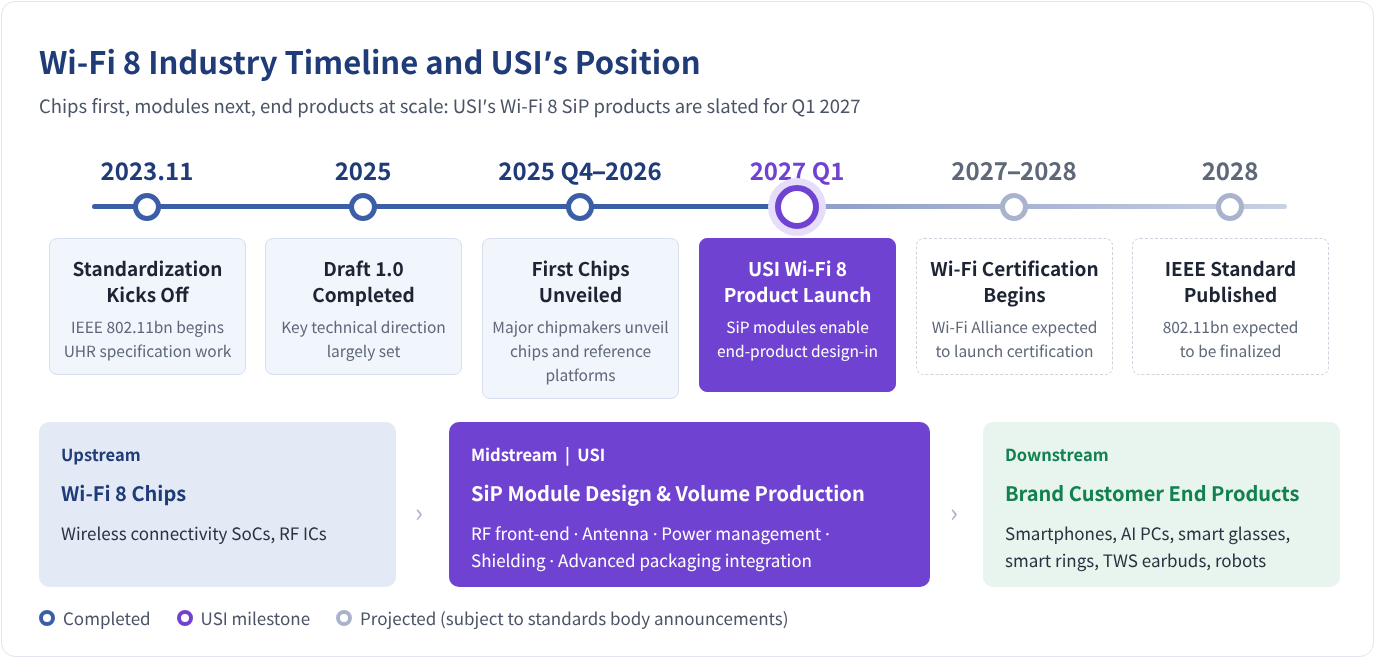
Figure 6: Wi-Fi 8 industry timeline and USI’s position in the supply chain.
(Source: Public information from IEEE and Wi-Fi Alliance, and industry reports; compiled by USI)
Wi-Fi 6 and 6E improved efficiency and expanded spectrum, and Wi-Fi 7 raised speed and bandwidth; Wi-Fi 8 aims to make every connection reliable and predictable. As billions of devices become smaller and smarter, staying connected is itself the most important specification. USI will continue to combine its capabilities in wireless connectivity, RF design, SiP integration, and advanced manufacturing to partner with global customers in the Wi-Fi 8 era.
Frequently Asked Questions (FAQ)
Q1. What is Wi-Fi 8, and how does it relate to IEEE 802.11bn?
Wi-Fi 8 is the industry’s generational name for the IEEE 802.11bn wireless LAN standard, the successor to Wi-Fi 7 (IEEE 802.11be). The IEEE task group developing the standard is called Ultra-High Reliability (UHR), and its core goal is to keep connections stable and predictable in congested, interference-heavy, or weak-signal environments. IEEE 802.11bn is expected to be finalized in 2028, and major chipmakers have been unveiling Wi-Fi 8 chips since Q4 2025.
Q2. What is the biggest difference between Wi-Fi 8 and Wi-Fi 7?
Wi-Fi 7 focused on raising peak data rates through features such as 320 MHz channels, 4096-QAM, and Multi-Link Operation (MLO). Wi-Fi 8 shifts the focus from peak speed to reliability. According to the IEEE 802.11bn project objectives, compared with Wi-Fi 7, Wi-Fi 8 targets at least 25% higher throughput under poor signal conditions, 25% lower 95th-percentile latency, and 25% fewer lost packets during roaming, while also reducing power consumption and improving peer-to-peer (P2P) operation.
Q3. What key new technologies does Wi-Fi 8 introduce?
They fall into three categories. First, Multi-AP Coordination—including Coordinated Beamforming (Co-BF) and Coordinated Spatial Reuse (Co-SR)—lets neighboring APs coordinate rather than interfere with one another. Second, dynamic spectrum optimization uses Dynamic Subband Operation (DSO) to improve utilization of wide channels. Third, PHY enhancements—Distributed Resource Units (DRU), Enhanced Long Range (ELR), and Unequal Modulation (UEQM)—improve uplink signal strength, long-range connectivity, and multi-stream transmission efficiency, respectively.
Q4. Why do smart glasses, smart rings, and TWS earbuds especially need Wi-Fi 8?
Wearables have extremely limited antenna space and battery capacity, and they move with the user, resulting in inherently weaker signals and frequent roaming. Wi-Fi 8’s DRU raises uplink transmit power within regulatory power limits, ELR extends the range of weak-signal devices, and Dynamic Power Save (DPS) helps extend battery life. Together with the target of 25% less packet loss during roaming, these features directly address the pain points of wearable devices.
Q5. What is System-in-Package (SiP), and why does it matter for Wi-Fi 8 devices?
System-in-Package (SiP) integrates multiple chips, the RF front-end, passive components, and even antennas into a single package, significantly reducing module area and simplifying system design. Wi-Fi 8 requires tighter co-design of wireless ICs, RF front-ends, antennas, and power management, and SiP balances RF performance, shielding, thermal management, and power consumption in an extremely small footprint. Based on USI’s track record, double-sided molding reduces area by about 30%, and wafer-level/system modules by 40–60%.
Q6. When will Wi-Fi 8 become mainstream?
Based on current public information, major chipmakers have been unveiling Wi-Fi 8 chips from Q4 2025 through 2026, and the first end products based on draft specifications are expected from late 2026. Wi-Fi Alliance certification is expected to begin between 2027 and 2028, and the IEEE 802.11bn standard is expected to be finalized in 2028. Actual adoption will depend on router and end-device replacement cycles.
Q7. What role does USI play in the Wi-Fi 8 supply chain?
Positioned between chipmakers and brand customers, USI serves as a system integrator. It combines upstream Wi-Fi 8 SoCs and RF ICs with RF front-end, antenna, power management, and shielding technologies to create SiP modules that can be integrated directly into end products, and manages the entire process from design and validation to volume production. As a member of ASE Technology Holding, USI has long-standing experience in SiP module design and manufacturing.
Search
Recent Articles
-
Wi-Fi 8 vs. Wi-Fi 7: What the “Three 25%” Targets Mean for Connectivity in AI Wearables
 Wi-Fi 8 vs. Wi-Fi 7: What the “Three 25%” Targets Mean for Connectivity in AI Wearables
11/23/2026
-
Exposing Warpage Risk Inside the Reflow Oven: A 3D “Contour Map” at 260°C
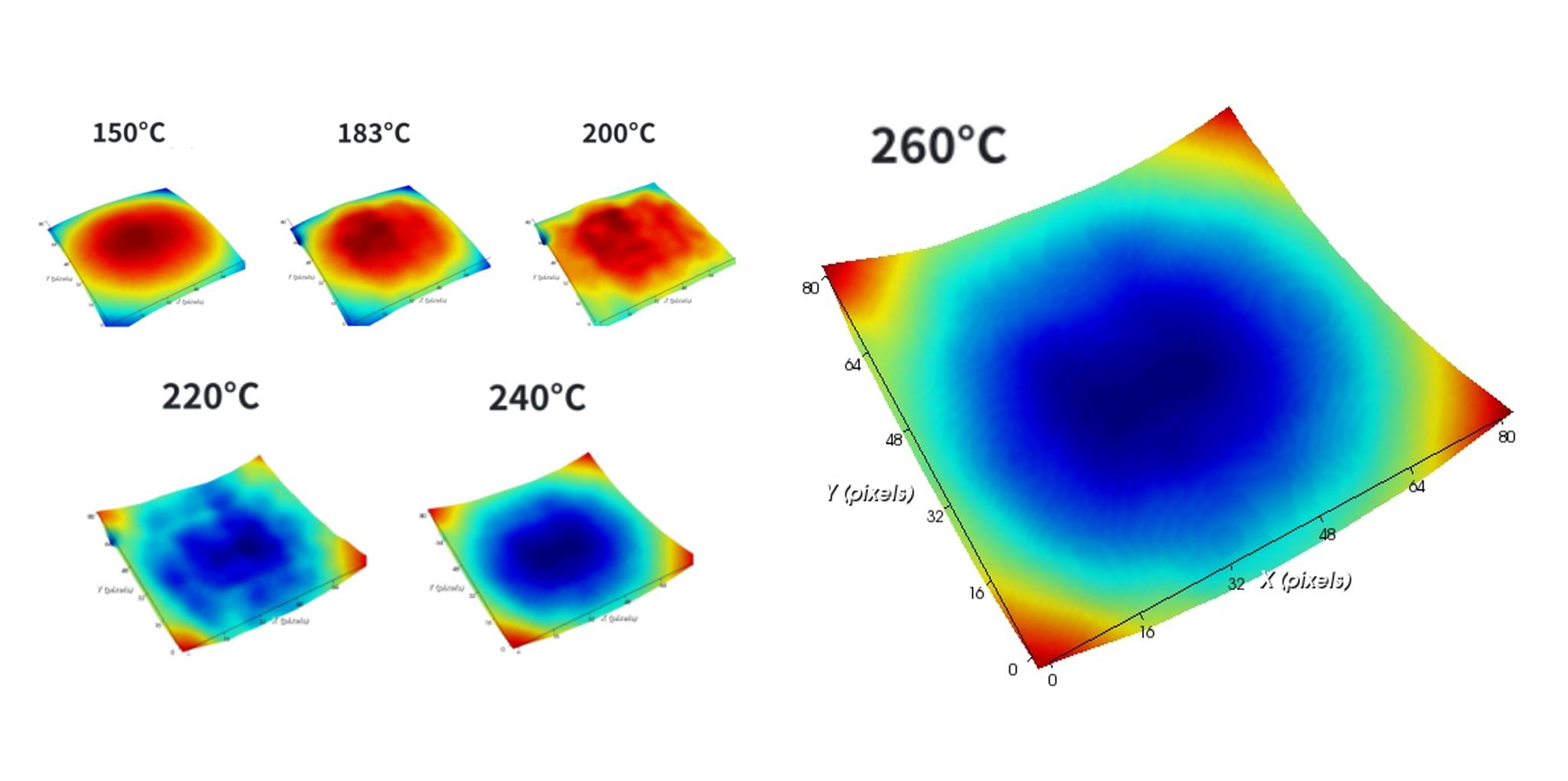 Exposing Warpage Risk Inside the Reflow Oven: A 3D “Contour Map” at 260°C
11/09/2026
-
A New Test Solution for HI Bottleneck: MicroPython Moves SiP from Being Tested to Testing Itself
 A New Test Solution for HI Bottleneck: MicroPython Moves SiP from Being Tested to Testing Itself
10/27/2026
-
From Untestable to Precisely Tested: Cracking the High-Density ICT Challenge
 From Untestable to Precisely Tested: Cracking the High-Density ICT Challenge
10/16/2026
-
Inside 1.6T Optical Transceivers: How Optical Simulation and Coupling Shape Performance and Yield
 Inside 1.6T Optical Transceivers: How Optical Simulation and Coupling Shape Performance and Yield
09/21/2026
-
The Next Frontier in AI Computing: Design and Manufacturing of 1.6T Optical Transceiver Modules
 The Next Frontier in AI Computing: Design and Manufacturing of 1.6T Optical Transceiver Modules
09/07/2026
-
A Key Step in Further Wearable Miniaturization: Selective Encapsulation with Fence + VPE
 A Key Step in Further Wearable Miniaturization: Selective Encapsulation with Fence + VPE
08/17/2026
-
Enabling AI at Scale: The Rise of Silicon Photonics and Optical Transceiver
 Enabling AI at Scale: The Rise of Silicon Photonics and Optical Transceiver
08/03/2026
-
When AI Learns to “Read”: Using Deep Learning to Tame the False-Alarm Storm on SMT Production Lines
 When AI Learns to “Read”: Using Deep Learning to Tame the False-Alarm Storm on SMT Production Lines
07/13/2026
-
Catching Invisible “Micro-Failures”: Safeguarding SiP Reliability Testing with Daisy Chains
 Catching Invisible “Micro-Failures”: Safeguarding SiP Reliability Testing with Daisy Chains
06/29/2026
Keep up with top trending topic
For the latest innovation technology, application
and industry insight.
Subscribe Our Blog
For the latest innovation technology, application
and industry insight.